Diabetes is a disease that affects the blood vessels throughout the body, particularly vessels in the kidney and eye. If you suffer from diabetes, you have to work even harder at maintaining your vision as diabetic eye disease can claim your eyesight. There are a few types of eye disease that can form as a result. As much as 80% of individuals who have been diabetic for 10 years battle these ailments.
Not only are the eyes the windows to the soul, but maintaining the health of your eyes is essential in order to retain your vision. There are a few types of eye disease that can form as a result of improper diabetic control. The diseases of the eye that can occur in diabetics include diabetic retinopathy, cataracts, and glaucoma.
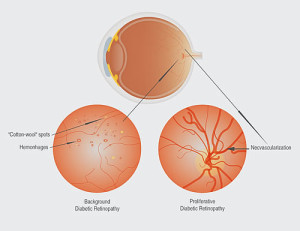
Diabetic retinopathy is the most common diabetic eye disease and one of the leading causes of blindness in adults. It affects the blood vessels in the retina and can lead to a leakage of fluid from the eyes. The two types of diabetic retinopathy include nonproliferative and proliferative retinopathy.
Non-proliferative retinopathy is the early stage where reading vision is not typically affected. If not detected it can advance and cause severe vision problems. Treatment for nonproliferative retinopathy is typically not necessary. The most important thing is to have regular eye exams to monitor any progression. Strict control of blood sugar, blood pressure, and cholesterol levels can greatly reduce or prevent diabetic retinopathy.
Proliferative retinopathy is when the illness has advanced. In this stage, new vessels grow or proliferate in the retina. These new vessels are the body’s attempt to overcome and replace the vessels which have been damaged by diabetes. These new vessels are not normal and they may bleed and cause your vision to become hazy. These new vessels can also damage the retina by forming scar tissue and by pulling the retina away from its proper location. Thankfully, any damage to the blood vessels in the eye can be slowed with treatment. For advanced proliferative retinopathy, laser surgery is often helpful. For abnormal blood vessel growth, the laser treatments are delivered over the peripheral retina.
A large majority of people who have diabetes will develop diabetic retinopathy, but with the available medical treatments, only a small percentage of people have serious vision problems. Early symptoms of diabetic retinopathy include floaters, blurriness, dark areas of vision, and difficulty perceiving colors.
Retina problems are often treatable, and early detection increases the chances for success. Even if you haven’t experienced any vision problems, it’s essential to get a retina exam with pupil dilation once a year.
Macular edema describes the condition where retinal blood vessels can develop tiny leaks. When this occurs, blood and fluid seep from the blood vessels and fatty material deposits in the retina. This causes swelling of the retina and is called diabetic macular edema. Symptoms can include reduced or blurred central vision, difficulty reading and colors will begin to fade and appear less vivid. Laser treatment can be used to reduce macular edema, focusing laser light on the damaged retina to seal leaking retinal vessels. The small laser scars that result will reduce abnormal blood vessel growth and help bond the retina to the back of the eye, thus preventing retinal detachment. Laser surgery can greatly reduce the chance of severe visual impairment and should be considered early in the course of the disease to prevent serious vision loss rather than to try and treat after vision loss has already occurred.
Cataracts
Cataracts can occur and manifest as a cloudiness in the lens of the eye. Symptoms may include increased difficulty driving at night, sensitivity to light or glare, frequent changes in eyeglass or contact lens prescriptions, double vision, and fading or yellowing of colors. Most notable, blurred vision comes as a result, and it can eventually worsen as you age. However, it is possible to rectify this particular problem with cataract surgery in which the cloudy lens is removed and replaced by one that is artificial and clear.
Glaucoma
Glaucoma results due to the eye’s lack of ability to drain natural fluid and putting too much pressure on the inside of the eye. This can lead to pain and blurred vision as the blood vessels and surrounding nerves in the eye become compressed. The most proliferate form of glaucoma is open-angle glaucoma, which can be treated with medication so that the eye can properly drain and can alleviate the pressure. This type of glaucoma typically has no symptoms until significant vision loss has occurred as it develops slowly.
Vitrectomy
Vitrectomy is the surgical removal of the vitreous gel which may help to improve vision if the retina has not become seriously damaged. This surgery is performed when there is bleeding, a retinal detachment has occurred, or severe scar tissue has formed.
Who is at Risk for Diabetic Eye Disease?
All diabetics are at risk and need an annual dilated eye exam, but those with poor blood sugar control are at highest risk and may need more frequent exams. Additionally, the longer you have diabetes, the higher risk you have of vision loss. Patients with type II diabetes should begin getting annual eye exams as soon as they are diagnosed, while those diagnosed in childhood with type I diabetes should begin getting eye exams within five years of being diagnosed.
Diabetes is not a death sentence for your vision. With good control of your blood sugar, blood pressure, cholesterol and regular eye exams, most patients can do very well and retain very good vision, even normal vision. Schedule a consultation with our experienced doctors to evaluate your health today.
It’s the right time for clearer vision
Make an appointment today at one of our eight convenient Atlanta-area locations.