

Intraocular lenses, or IOLs, are artificial lenses that replace the eye’s natural lens, which is removed during the cataract surgery procedure. Traditional IOLs used as replacement lenses after surgery are monofocal, meaning they improve only distance vision.
If you had traditional IOLs, you would still have to wear glasses or contacts for reading. However, the cataract replacement lenses available to you today are greatly improved, allowing you to see near, far, and everywhere in-between without glasses or contacts.
The main type of IOLs (intraocular lenses) are:
In addition to these IOLs, the surgeons can work on designing monovision or mini-monovision (blended vision) customized to their patient’s visual goals.
When considering cataract surgery, it is important to discuss the risks and benefits of the surgery with your eye doctor. With advancements in artificial lens technology over the last decade, discussing the type of new lens to be placed in the eye has become very important as well.
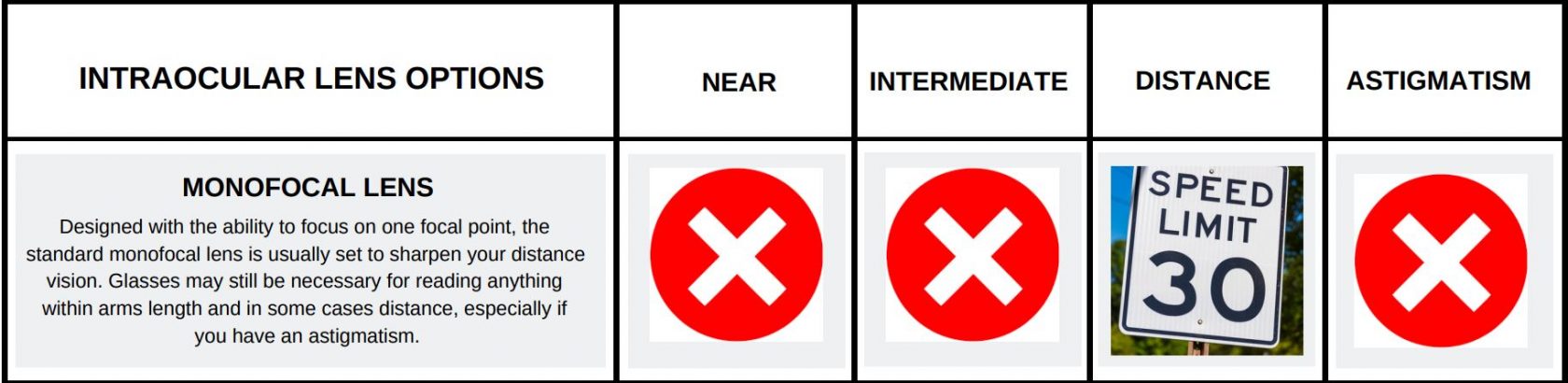
Monofocal lens implants are implanted during surgery, after the removal of the natural lens. These lenses can be corrected for distance, intermediate, or near vision, meaning monofocal lens implant patients will still need reading glasses for near and intermediate vision.
Lenses are made of acrylic or silicone, allowing them to be both flexible and durable. The lens implant works in the same way the natural lens of your eye does. Light enters the eye through the cornea and pupil and is focused by the implanted lens onto the retina. The image received is then transferred to the brain through your optic nerve. The light can only be bent to one focal point at a time due to the lens being monofocal.
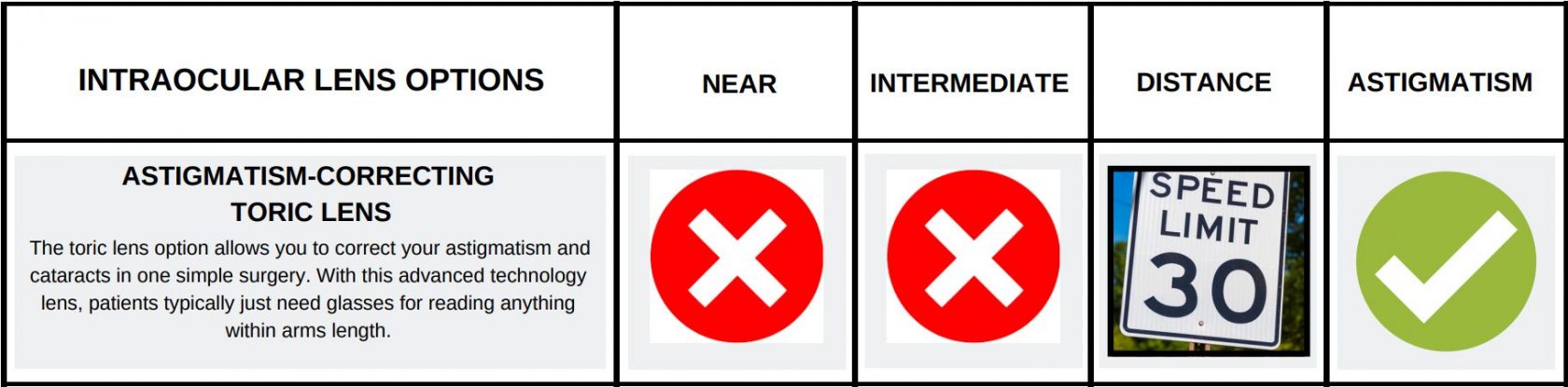
Toric lens implants are a good treatment option for patients who have astigmatism in combination with another refractive error, such as nearsightedness or farsightedness. By implanting toric lenses in the eye, your eye surgeon may be able to correct both of these vision issues. Toric IOLs work by correcting the imperfect curvature of the cornea or lens in the eye. This treatment method is especially effective because toric lenses can be customized to suit the exact needs of each patient’s eye or eyes. The use of toric lens implants may also be effective enough to make future eye surgeries, such as LASIK or PRK, unnecessary.
Multifocal lens implants are a relatively new development, replacing single focus lens implants. Single focus lens implants require patients to still use corrective glasses when reading or driving, while multifocal lens implants allow for distance and near focusing at one specific distance at the same time. Some lenses provide near (reading) and distance vision while others provide intermediate (computer distance) and distance vision. Many patients find that multifocal lenses add greatly to their quality of life and they enjoy the convenience of not having to keep up with reading glasses.
Multifocal lens implants feature a patented design that distributes light to distance evenly within the eye, allowing us to see better at various focal points.
In order for these lenses to work well, patients must have relatively healthy eyes. Those with severe dry eye, macular degeneration, or advanced glaucoma are not good candidates. A patient also must not have much astigmatism in order for these lenses to work well. Patients with larger amounts of astigmatism would likely benefit more from an astigmatism-correcting intraocular lens, such as a toric lens, or more advanced multifocal lenses, such as Extended Depth of Focus (EDOF) lenses.

EDOF, differ from previous Multifocal lenses in that instead of giving near vision at one specific distance, they correct distance vision and keep objects in focus continuously up to about 18 inches away. Patients treated with these lenses have been shown to have excellent vision for distance activities, such as driving and sports, as well as intermediate activities such as viewing their dashboard and using a computer or tablet. Many patients also have some ability to perform certain activities at a distance closer than 18 inches, although low power reading glasses are needed for things such as reading fine print and knitting.
There are some impressive features that make EDOF lenses a large advancement as compared to previous multifocal lenses:
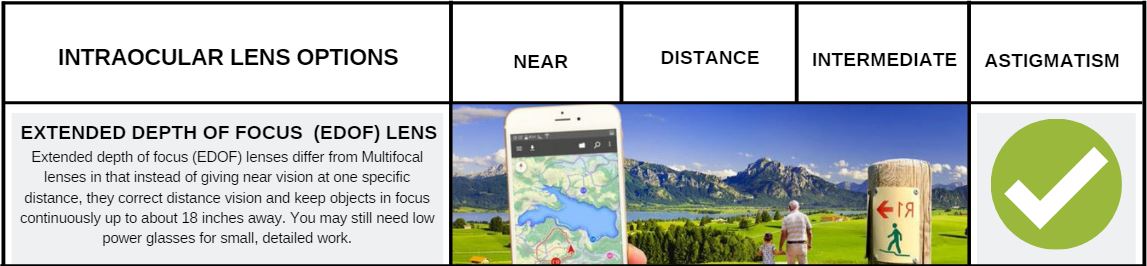
Extended Depth of Focus (EDOF) Lens
*Visual provided by Johnson & Johnson’s Visual Simulator
Occasionally, patients decide to have the dominant eye corrected for distance and the non-dominant eye corrected for near vision; this is called monovision. This option reduces the dependence on glasses but may take some time to get used to, as the brain adapts to this optical status.
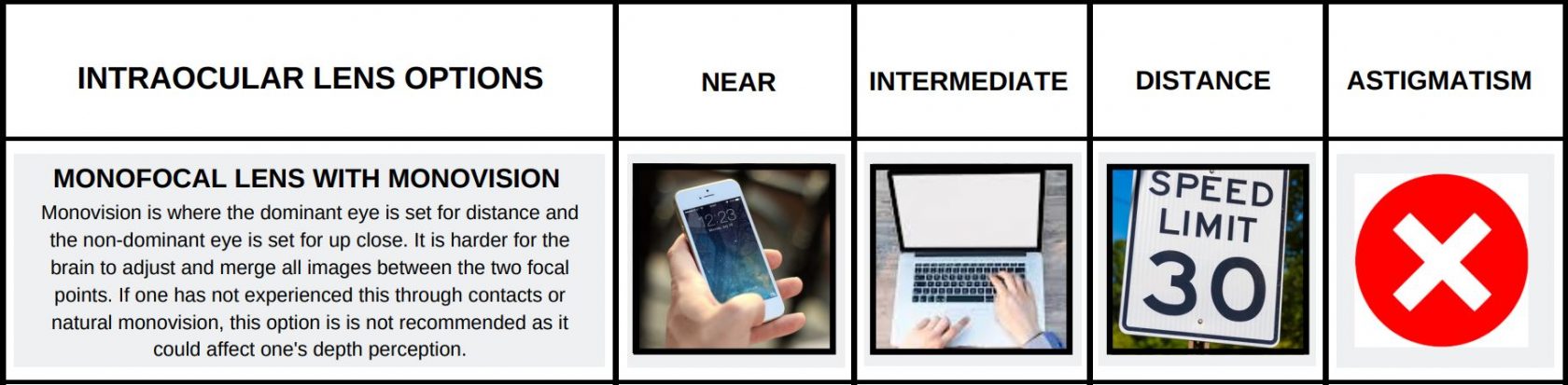
Occasionally, patients decide to have the dominant eye corrected for distance and the non-dominant eye corrected for intermediate vision; this is called blended vision. This option reduces the dependence on glasses and is easier to adjust to when compared to traditional monofocal lens implants with monovision. With this option, over the counter magnifiers are needed in order to focus on small details.
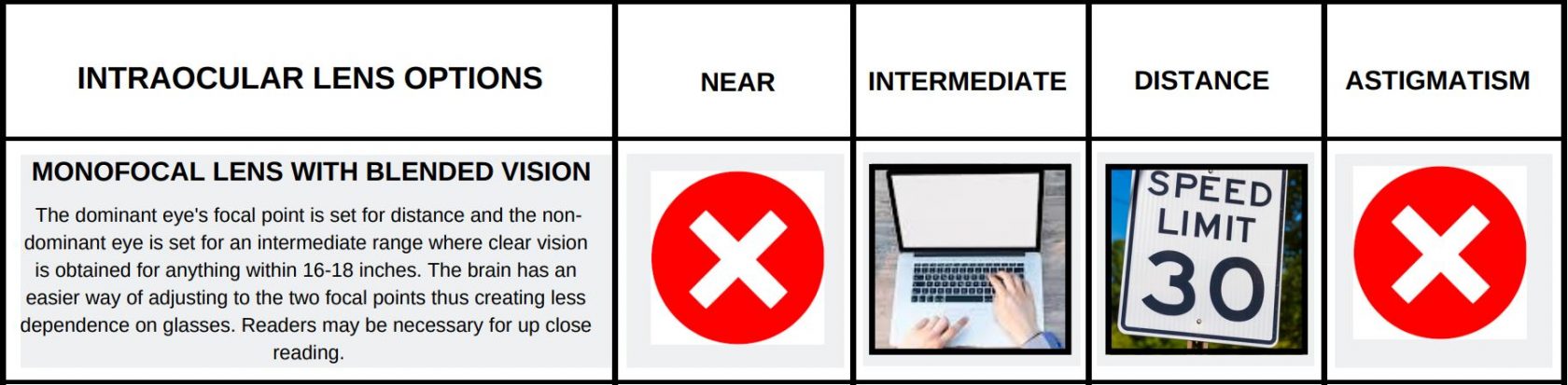
Each lens option is not meant for all patients. There are many tests we do here at Milan Eye Center to help determine which lens is best for you and your eye anatomy and health. In order for monofocal or multifocal lenses to work well, patients must have:
Patients with the following are not good candidates for multifocal lens implants:
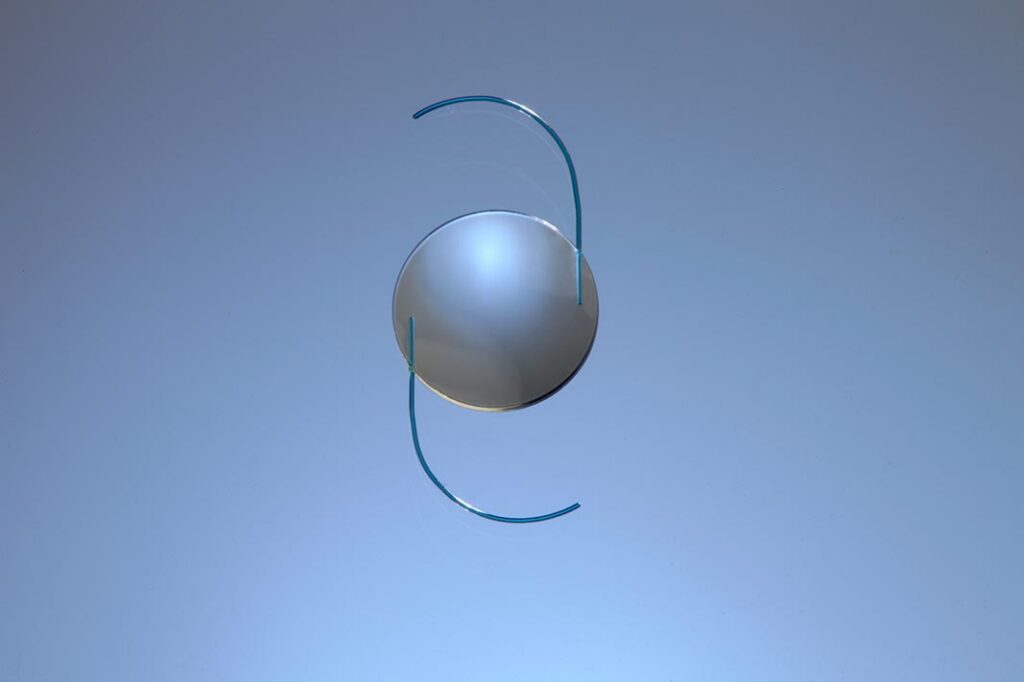
The Light Adjustable Lens (LAL), manufactured by RxSight, represents a paradigm shift in ophthalmology because it moves the “final prescription” phase from the operating room to the doctor’s office. This technology allows postoperative adjustment of vision using specialized light treatments, offering a high level of customization and precision. It is an excellent option for patients with prior refractive surgery (LASIK, PRK, RK). A blended vision approach (one eye for distance and one for near) is often utilized, which may require an adaptation period and is not suitable for all patients. This option requires multiple postoperative visits and strict adherence to UV protection guidelines.
The LAL is made of a special photosensitive material (macromers) distributed throughout the lens.
Unlike traditional surgery where the process ends after the drops stop, the LAL involves a 4-to-6-week “refining” period:
Because the lens remains “active” and sensitive to light until the final lock-in, there is a strict lifestyle requirement:
The description mentions “Blended Vision.” This is where the LAL truly shines compared to standard lenses:
While anyone with cataracts is a candidate, the LAL is particularly beneficial for:
| Feature | Light Adjustable Lens (LAL) | Standard Premium Lens |
|---|---|---|
| Accuracy | Highest (Adjusted after healing) | High (Based on pre-op estimates) |
| Flexibility | Can change your mind after surgery | Permanent once implanted |
| Effort | Requires multiple office visits | Fewer follow-ups |
| Requirement | Must wear UV glasses for weeks | No special glasses required |
| Night Vision | Excellent (Clear, no halos) | Possible halos (with multifocals) |
Make an appointment today at one of our eight convenient Atlanta-area locations.
Schedule an Appointment Online
Or call 678-381-2020