

The optic nerve contains more than one million nerve fibers that transmit visual information from the eye to the brain.
Glaucoma specialists once thought that the loss of these fibers was due strictly to increased pressure in the eye (intraocular pressure or IOP). Now, they’ve discovered that even patients with normal pressure can have glaucoma (Normal Tension Glaucoma) and potentially lose the nerve fibers that connect the brain and the eye.
In many types of glaucoma, pressure builds up in the eye because the drainage system does not remove fluid efficiently. A clear fluid called aqueous humor is continuously produced by the ciliary body behind the iris and flows through the front part of the eye. Now, if the fluid is always being produced, it has to leave the eye somehow, right? Your eye contains channels through which the excess fluid leaves. If the fluid is blocked from exiting the eye it builds up, increasing the pressure in your eye.
Our glaucoma specialists focus on early detection and treatment to help slow or prevent vision loss from glaucoma.
There are several major types of glaucoma:
Your eye’s drainage system lies in a part of the eye called the angle, which is between the cornea and the iris of the eye. This angle can be open or closed. The most common form of glaucoma is chronic open-angle glaucoma or primary open-angle glaucoma. The drainage angle is open in these patients, but the eye fluid does not drain as quickly as it should. Closed-angle glaucoma occurs when the drainage angle closes, and almost no eye fluid can escape.

Unfortunately, most people with open-angle glaucoma experience no symptoms in the early stages, which is why routine eye exams are important. Therefore, routine testing by an ophthalmologist or optometrist can detect glaucoma before symptoms appear. Early treatment can slow or prevent further vision loss.
For open‑angle glaucoma, many patients will begin to notice:
With open‑angle glaucoma, most people have no symptoms. Once you experience vision loss, the condition is advanced, and the damage is already severe. Tunnel vision is common.
For narrow angle glaucoma or acute angle-closure glaucoma typically occurs suddenly, often in one eye, and requires immediate medical attention.
These include:
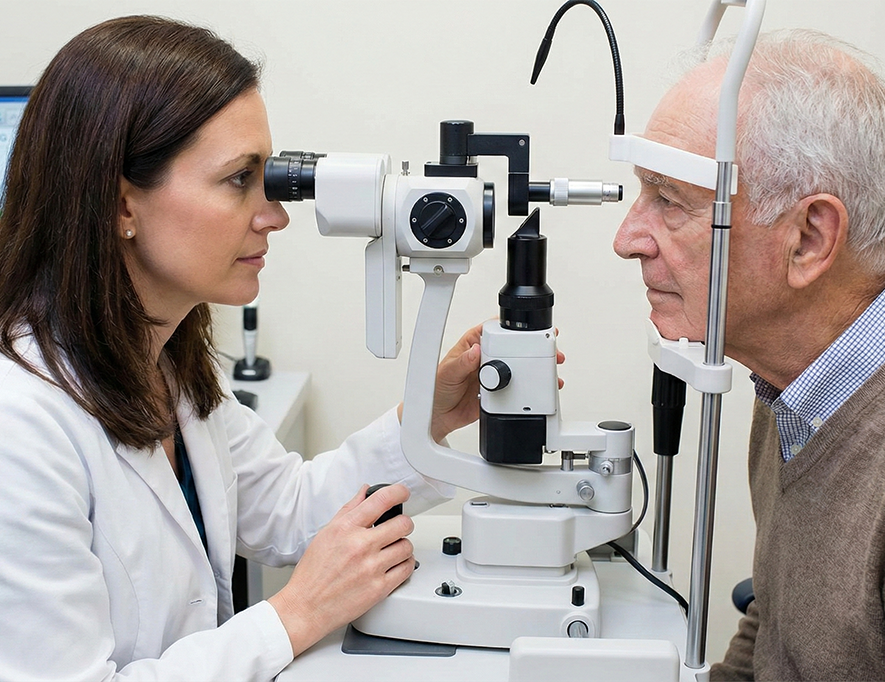
A complete eye exam is needed to diagnose glaucoma. You may receive eye drops to widen (dilate) your pupil. The glaucoma doctor can look at the inside of the eye when the pupil is dilated.
A test called (tonometry) checks eye pressure. However, because eye pressure changes all the time, eye pressure can be normal in some people with glaucoma. This is called normal-tension glaucoma. Your doctor will need to run other tests to confirm glaucoma.
Some of the tests your glaucoma specialist may do can include:
Eye Drops – Most people can be treated successfully with eye drops. Most eye drops used today have fewer side‑effects than those used in the past. You may also get pills to lower pressure in the eye.
Durysta – Durysta is an implant that your eye doctor inserts into your eye. It disperses a medication called bimatoprost into the eye that lowers IOP.
Selective Laser Trabeculoplasty (SLT) is an in-office procedure that reduces intraocular pressure in patients with glaucoma. The laser is applied through a special contact lens to the trabecular meshwork of the eye, where it stimulates a biochemical change that improves the outflow of fluid from the eye. SLT has been used since 1995 and has a proven track record for efficacy. On average, SLT can lower eye pressure by 20 to 30%. The laser is successful in about 80% of patients. In addition, studies have shown that SLT has a similar outcome compared to the most effective glaucoma eye drops. The treatment effect may last 3 to 5 years and SLT can be repeated when the original treatment effect diminishes.
Laser Peripheral Iridotomy (LPI) is a treatment for narrow-angle glaucoma. In laser iridotomy, a small hole is placed in the iris to create a hole for fluid to drain from the back of the eye to the front of the eye. Without this new channel through the iris, intra-ocular pressure can build rapidly causing damage to the delicate optic nerve, and permanent loss of vision. The purpose of an iridotomy is to preserve vision, not to improve it.
Minimally Invasive Glaucoma Surgery (MIGS) represents the latest advancement in glaucoma treatment. These procedures utilize microscopic instruments and tiny incisions to lower eye pressure (intraocular pressure or IOP) while minimizing disruption to the eye’s natural tissues. Minimally Invasive Glaucoma Surgeries (MIGS) has revolutionized glaucoma management with minimal tissue trauma, good post-operative recovery, and improved patient satisfaction.
Compared with traditional glaucoma surgery, MIGS procedures generally offer:
The goal of MIGS is to lower eye pressure by improving the eye’s ability to drain fluid or by reducing the amount of fluid the eye produces. Lowering eye pressure helps protect the optic nerve and slow the progression of glaucoma.
These procedures enhance the eye’s natural drainage pathway (the trabecular meshwork and Schlemm’s canal) to improve fluid outflow.
The iStent Infinite is a tiny titanium implant designed for patients with open-angle glaucoma. Three microscopic stents are placed within the eye’s natural drainage canal to improve fluid outflow and reduce eye pressure.
The Hydrus Microstent is a small flexible implant that both bypasses the trabecular meshwork and dilates a portion of Schlemm’s canal, enhancing the eye’s natural drainage.
The OMNI Surgical System combines canaloplasty and trabeculotomy in a single procedure. By opening and restoring the eye’s natural drainage channels, it improves fluid outflow without leaving a permanent implant.
VIA360 is a minimally invasive canaloplasty/goniotomy procedure that enlarges and restores the eye’s natural drainage canal, helping fluid exit the eye more efficiently and lowering intraocular pressure.
The XEN Gel Stent is a soft, microscopic tube that creates a new pathway for fluid to drain from the inside of the eye to a small reservoir beneath the conjunctiva, lowering eye pressure with significantly less tissue disruption than traditional filtering surgery.
Endocyclophotocoagulation (ECP) uses a tiny laser probe to precisely treat the ciliary processes, the part of the eye responsible for producing aqueous fluid. By decreasing fluid production, ECP lowers intraocular pressure and is often performed at the same time as cataract surgery.
MIGS procedures are most commonly recommended for patients with mild to moderate glaucoma who require better pressure control while minimizing the risks associated with traditional glaucoma surgery. Many MIGS procedures can be performed during cataract surgery, allowing both conditions to be treated in a single operation.
During your consultation, our doctors will evaluate your type and severity of glaucoma, current eye pressure, medications, and overall eye health to determine which procedure, if any, is best suited to your individual needs.
Milan Eye Center surgeons serve the Atlanta area across multiple convenient locations. Their team has spent years educating themselves on the most innovative treatments available today.
The goal of glaucoma treatment is to reduce the pressure in your eye. Treatment depends on the type of glaucoma that you have and includes medicine (eye drops, pills), glaucoma laser surgery, minimally invasive glaucoma surgeries, traditional glaucoma incisional surgery or a combination of these methods. The primary goal is to prevent further vision loss from glaucoma, which is irreversible.
If you have secondary glaucoma, treating the underlying condition may help control the glaucoma and prevent further damage. Patients may need other treatments.
Because glaucoma damage cannot be reversed, early detection and consistent treatment are essential to preserving vision.
Our knowledgeable staff is here to answer all your questions about which procedure is best for you, and ensure you have the most comfortable experience possible. Make an appointment today at one of our eight convenient locations.
Schedule an Appointment Online
Or call 678-381-2020

Ready for Extraordinary Vision?
Request a consultation to get started!