
LASIK is one of the most trusted vision correction procedures, designed to reshape the cornea and improve how light enters the eye. At Milan Eye Center, our Atlanta LASIK specialists use advanced laser technology to help patients enjoy sharper vision and reduce their dependence on glasses or contacts.
As a patient at Milan Eye Center, our knowledgeable surgeons and coordinators will walk you through every step. The procedure usually takes 5-8 minutes per eye, with an average of 10-15 minutes total.
Our eight locations across Atlanta, Georgia ensure that the finest eye services and surgeons are just around the corner. Meet our team of award-winning surgeons to discover what sets us apart. Our ophthalmologists and optometrists will be happy to answer any questions you may have about the surgery.
LASIK (Laser-Assisted In Situ Keratomileusis) is a safe and effective outpatient procedure designed to correct common vision problems like nearsightedness, farsightedness, and astigmatism. By gently reshaping the cornea with a precision laser, LASIK helps the eye focus light more accurately, leading to clearer, sharper vision.
LASIK is the safest, most successful, and most widely studied elective procedure globally, with the highest patient satisfaction rate of any elective procedure (95% to be exact). A good LASIK candidate has a low risk of complication, especially when screened and treated with the correct equipment by an experienced surgeon.

With recent advances in technology, more and more people are prime candidates for laser eye surgery. Here are the characteristics of LASIK patients we take on:
If LASIK is not right for you, our specialists may recommend alternatives such as PRK or implantable lenses.
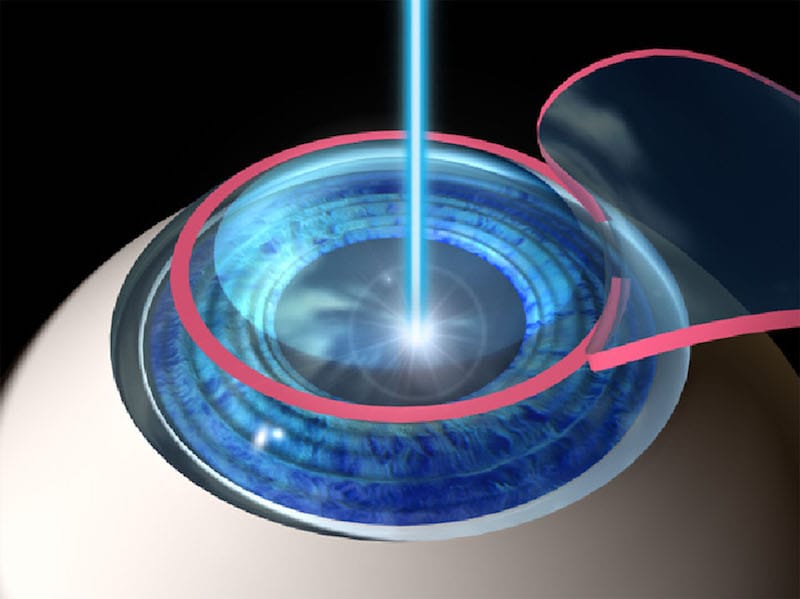
The LASIK procedure itself is surprisingly fast, usually taking less than 15 minutes per eye. This is the process that a patient can expect during bladeless LASIK eye surgery:

After LASIK, you won’t need your glasses or contacts to see clearly anymore. Your specific results depend on your desired vision outcome. Our experienced physicians will help you determine the best option for you:
Choosing the right vision correction option can be complicated, especially with so many advanced technologies available today. Be it LASIK (Laser-Assisted In Situ Keratomileusis), PRK (Photorefractive Keratectomy), EVO ICL (Implantable Collamer Lens), or RLE (Refractive Lens Exchange), each offers effective pathways to clear vision, but they differ in technique, eligibility, and recovery time. Understanding their similarities and distinctions might help you align your vision goals with the right treatment.
| Features | LASIK | PRK | EVO ICL | RLE |
|---|---|---|---|---|
| How it works | A femtosecond laser creates a corneal flap, and an excimer laser reshapes the cornea, correcting your vision | Epithelium is removed to reshape the corneal surface with the excimer laser | A biocompatible lens is implanted in front of the natural lens and behind the iris | The natural crystalline lens is removed and replaced with an intraocular lens (IOL) for vision correction |
| What it corrects | Low-prescription myopia, hyperopia, and astigmatism | Myopia, hyperopia, and astigmatism | Moderate to high myopia and astigmatism | Presbyopia, high hyperopia/myopia, and cataracts |
| Ideal age range | Adults aged 18–55 | 18–45, and those not suitable for LASIK | 21–45 years of age and older | 40+ (for older adults) |
| Corneal tissue removal | Yes, under a flap | Tissue is removed from the surface (no flap creation) | No substantive tissue removal (a small incision is created) | No corneal tissue removal |
| Suitability for thin corneas | Not for those with insufficient corneal thickness | Better for people with thin corneas | Suitable in cases where LASIK or PRK may be contraindicated | Corneas aren’t reshaped |
| Presbyopia correction | Cannot stop presbyopia | Doesn’t prevent presbyopia | Might still develop presbyopia | Can address presbyopia |
| Initial discomfort | Minimal to moderate | Higher initial discomfort | Mild to moderate | Mild to moderate |
| Dry eye risk | Flap creation can lead to dry eye issues | Lower than LASIK | Lower than LASIK | Lower dry-eye risk but higher lens-related side effects |
| Recovery speed | Very fast; functional vision can return within 24 hours | Slower recovery; vision clarity returns after weeks | Moderate; requires some settling time | Moderate and staged between both eyes |
| Cataract correction | Not possible | Not possible | Not possible | Possible, by replacing the natural lens and removing the future substrate for cataracts |
| Advantages | Precise, popular, quick, advanced, and safe | Good for patients with thin corneas, high-impact occupations, and those who don’t need a flap | Best for thin corneas, high myopia, and when reversal may be needed | Better for presbyopia patients, severe refractive errors, and early cataracts |
| Downsides | Dry eye, glare, halos, and flap complications | Slow recovery, epithelial healing risks, and early discomforts | Infection, increased IOP, and higher costs | Infection, IOL issues, retinal detachment, more invasive, and expensive |
LASIK is more affordable than continuing to spend money on glasses and contact lenses every year. The average national cost of LASIK in 2025 was approximately $2,500 per eye. The cost of LASIK surgery in Atlanta usually includes the initial consultation, the procedure, and post-operative follow-up care.
While this is a large upfront LASIK surgery cost, Atlanta patients typically save money in the long run as they no longer need prescription glasses or contact lenses and supplies.
Milan Eye Center accepts most insurance providers and has financing options through Healthcare Finance Direct (HFD). Flexible spending accounts (FSA’s) and Health savings accounts (HSA’s) are employer-sponsored programs allowing pre-tax dollars to be set aside for medical costs. You may be able to get LASIK virtually tax-free.
Are you considering LASIK eye surgery? These FAQs answer how LASIK works, its benefits, alternatives, downsides, and what you can expect from the treatment:
Make an appointment today to discuss which procedures best meet your refractive goals. Come to one of our eight convenient Atlanta-area locations.
Schedule an Appointment Online
Or call 678-381-2020